Fleur de Sel — Île de Ré
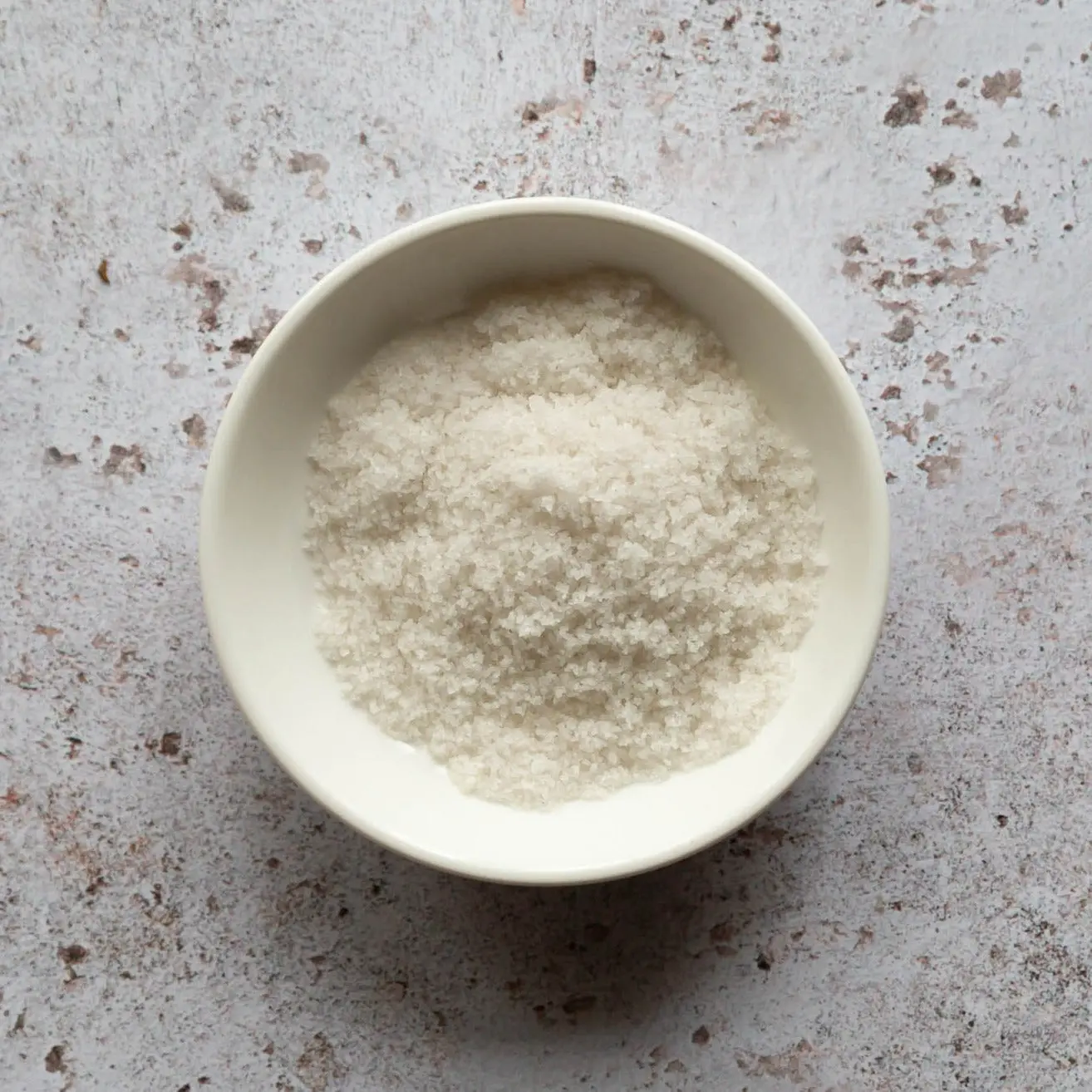
Fleur de sel is the most prized of all French sea salts, and the fleur de sel of Île de Ré is among the finest produced anywhere. It forms as a thin, fragile crust on the surface of the salt marsh basins — known as carnations — during the precise conditions of strong sun, dry air, and steady sea breeze that the Atlantic coast of western France provides each summer. If not harvested in time, the crystals sink overnight and become ordinary coarse salt. The difference between fleur de sel and regular sea salt is entirely in the harvesting: the salt workers (sauniers) skim the surface layer by hand using slow, precise movements that preserve the delicate crystal structure. The result is a salt with a texture reminiscent of snow — light, moist, and irregular — with a subtle complexity that industrial salts cannot replicate.
This particular fleur de sel has a slightly pink hue and carries a faint aroma often compared to violets — characteristics unique to the Île de Ré marshes. It is not a cooking salt. Fleur de sel is used exclusively as a finishing salt, added just before serving to boost the flavour of a dish at the moment it reaches the table. It elevates everything it touches — eggs, fish, grilled meat, steamed vegetables, salads, chocolate, and caramel all benefit from a pinch of fleur de sel where the crystals can be tasted individually rather than dissolved into the dish.
Producer: Terre Exotique, a French spice house founded in 1998 after its founder discovered Penja pepper on a plantation in Cameroon. The company sources directly from growers worldwide and processes at its facility in France, maintaining close relationships with producers to ensure traceability and quality across its range.
Storage: Ambient. Store in a dry place.
Net: 110g
Original: $9.81
-70%$9.81
$2.94Product Information
Product Information
Shipping & Returns
Shipping & Returns
Description
Fleur de sel is the most prized of all French sea salts, and the fleur de sel of Île de Ré is among the finest produced anywhere. It forms as a thin, fragile crust on the surface of the salt marsh basins — known as carnations — during the precise conditions of strong sun, dry air, and steady sea breeze that the Atlantic coast of western France provides each summer. If not harvested in time, the crystals sink overnight and become ordinary coarse salt. The difference between fleur de sel and regular sea salt is entirely in the harvesting: the salt workers (sauniers) skim the surface layer by hand using slow, precise movements that preserve the delicate crystal structure. The result is a salt with a texture reminiscent of snow — light, moist, and irregular — with a subtle complexity that industrial salts cannot replicate.
This particular fleur de sel has a slightly pink hue and carries a faint aroma often compared to violets — characteristics unique to the Île de Ré marshes. It is not a cooking salt. Fleur de sel is used exclusively as a finishing salt, added just before serving to boost the flavour of a dish at the moment it reaches the table. It elevates everything it touches — eggs, fish, grilled meat, steamed vegetables, salads, chocolate, and caramel all benefit from a pinch of fleur de sel where the crystals can be tasted individually rather than dissolved into the dish.
Producer: Terre Exotique, a French spice house founded in 1998 after its founder discovered Penja pepper on a plantation in Cameroon. The company sources directly from growers worldwide and processes at its facility in France, maintaining close relationships with producers to ensure traceability and quality across its range.
Storage: Ambient. Store in a dry place.
Net: 110g