Cévennes Onions P.D.O.
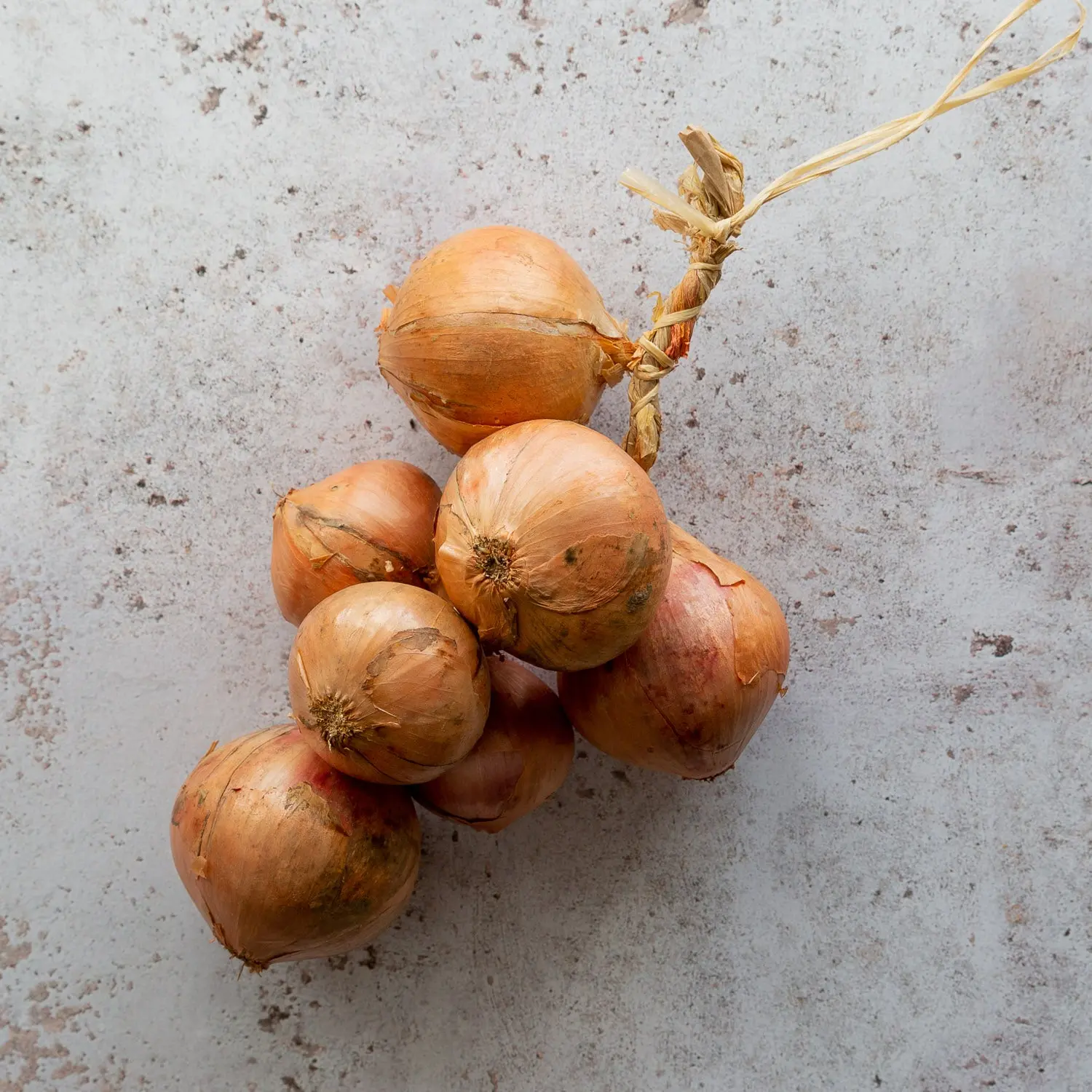
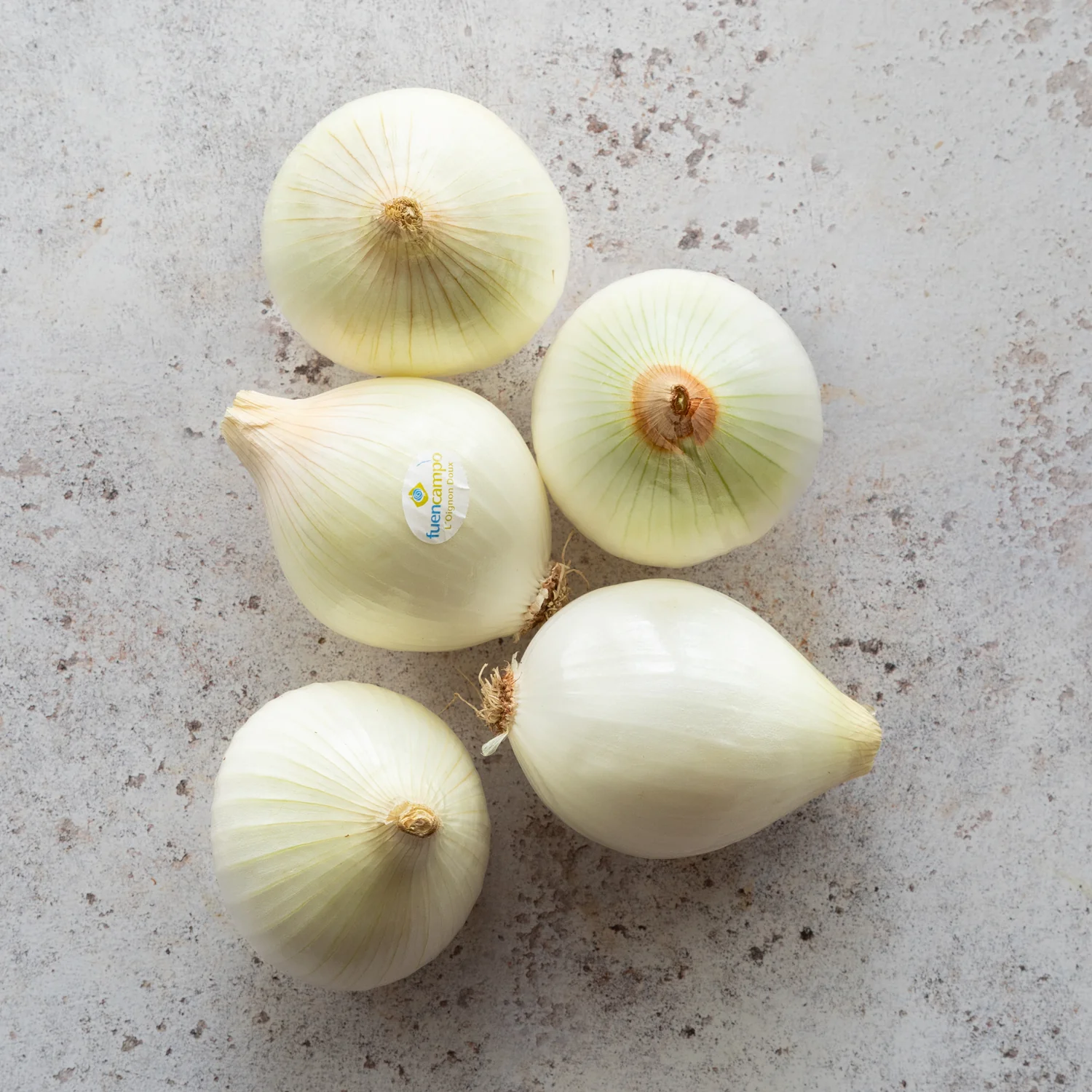
Oignon Doux des Cévennes (Allium cepa) — the sweet onion from the mountain terraces of the Cévennes in southern France, holding AOP (Appellation d'Origine Protégée) status since 2008. These are grown on narrow, stone-walled terraces at altitude in the Cévennes National Park, on granite-derived sandy soils that drain freely and force the onion to develop slowly. The steep terrain makes mechanisation impossible — everything from planting to harvest is done by hand, which limits yields and is part of the reason the onion costs more and tastes different from anything grown on flat, irrigated land.
The Cévennes onion is genuinely sweet in a way that most onions described as "sweet" are not. It has an unusually low pyruvic acid content — the compound responsible for the sharpness and the tears — which means it can be eaten raw without the burning, astringent quality that makes raw onion unpleasant in quantity. The texture is crisp and juicy, closer to an apple than a standard storage onion, and the flesh is pale white with no hint of the sulphurous heat that dominates ordinary varieties. This makes it as much a salad ingredient as a cooking one. Sliced thinly and eaten raw, it is genuinely mild. Cooked, the natural sugars caramelise easily and the flesh collapses into something soft and deeply sweet — excellent in tarts, gratins, slow-roasted whole, or as a confit.
Origin: Cévennes, southern France (AOP/PDO)
Ingredients: Cévennes sweet onions (Allium cepa)
Storage: Refrigerate to maintain freshness. Cévennes onions have a higher water content than standard storage onions and do not keep as long at room temperature. Use within two to three weeks.
Original: $12.18
-70%$12.18
$3.65Product Information
Product Information
Shipping & Returns
Shipping & Returns
Description
Oignon Doux des Cévennes (Allium cepa) — the sweet onion from the mountain terraces of the Cévennes in southern France, holding AOP (Appellation d'Origine Protégée) status since 2008. These are grown on narrow, stone-walled terraces at altitude in the Cévennes National Park, on granite-derived sandy soils that drain freely and force the onion to develop slowly. The steep terrain makes mechanisation impossible — everything from planting to harvest is done by hand, which limits yields and is part of the reason the onion costs more and tastes different from anything grown on flat, irrigated land.
The Cévennes onion is genuinely sweet in a way that most onions described as "sweet" are not. It has an unusually low pyruvic acid content — the compound responsible for the sharpness and the tears — which means it can be eaten raw without the burning, astringent quality that makes raw onion unpleasant in quantity. The texture is crisp and juicy, closer to an apple than a standard storage onion, and the flesh is pale white with no hint of the sulphurous heat that dominates ordinary varieties. This makes it as much a salad ingredient as a cooking one. Sliced thinly and eaten raw, it is genuinely mild. Cooked, the natural sugars caramelise easily and the flesh collapses into something soft and deeply sweet — excellent in tarts, gratins, slow-roasted whole, or as a confit.
Origin: Cévennes, southern France (AOP/PDO)
Ingredients: Cévennes sweet onions (Allium cepa)
Storage: Refrigerate to maintain freshness. Cévennes onions have a higher water content than standard storage onions and do not keep as long at room temperature. Use within two to three weeks.